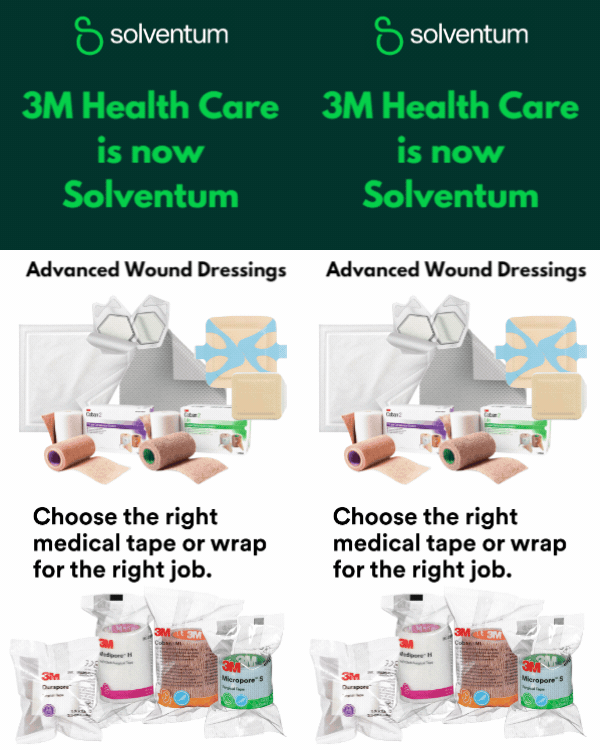
Hard-to-heal wounds are a growing concern in healthcare—especially in community and outpatient settings where early intervention is critical. These chronic or non-healing wounds don’t follow a typical recovery path and often require specialized attention and tools to improve outcomes. That’s where Solventum (formerly 3M Health Care) is stepping in with clear, evidence-based guidance and a comprehensive portfolio of products.
Informed by a panel of wound care experts and recently published in the International Wound Journal, Solventum’s clinical decision-making algorithm gives community-based healthcare providers a practical roadmap to assess, treat, and escalate care for hard-to-heal wounds. Here’s a closer look at the TIMERS approach to managing hard-to-heal wounds.
Hard-to-heal wounds are defined as wounds that fail to show significant healing—typically a 40–50% size reduction within four weeks—despite standard care. These include diabetic foot ulcers (DFUs), venous leg ulcers (VLUs), pressure injuries, and more.
Community-based providers are uniquely positioned to make early, impactful decisions in wound care. Solventum’s wound care algorithm equips them with a step-by-step guide to:
Solventum organizes wound care strategies around the “TIMERS” framework—a clinical model used to evaluate and address the multiple factors that influence wound healing:
T – Tissue
Identifying necrotic (slough or eschar) vs. granulating tissue is the first step.
I – Inflammation With or Without Infection
Even without overt signs, inflammation or biofilm presence can delay healing.
M – Moisture/Exudate
Balanced moisture supports healing; too much or too little hinders progress.
E – Edge of Wound
Rolled or non-advancing wound edges may signal stalled healing.
R – Repair/Regeneration
If the wound shows <50% size reduction by week four, it may be time for advanced therapies.
S – Social Factors
Patient lifestyle, adherence, and support networks affect healing.
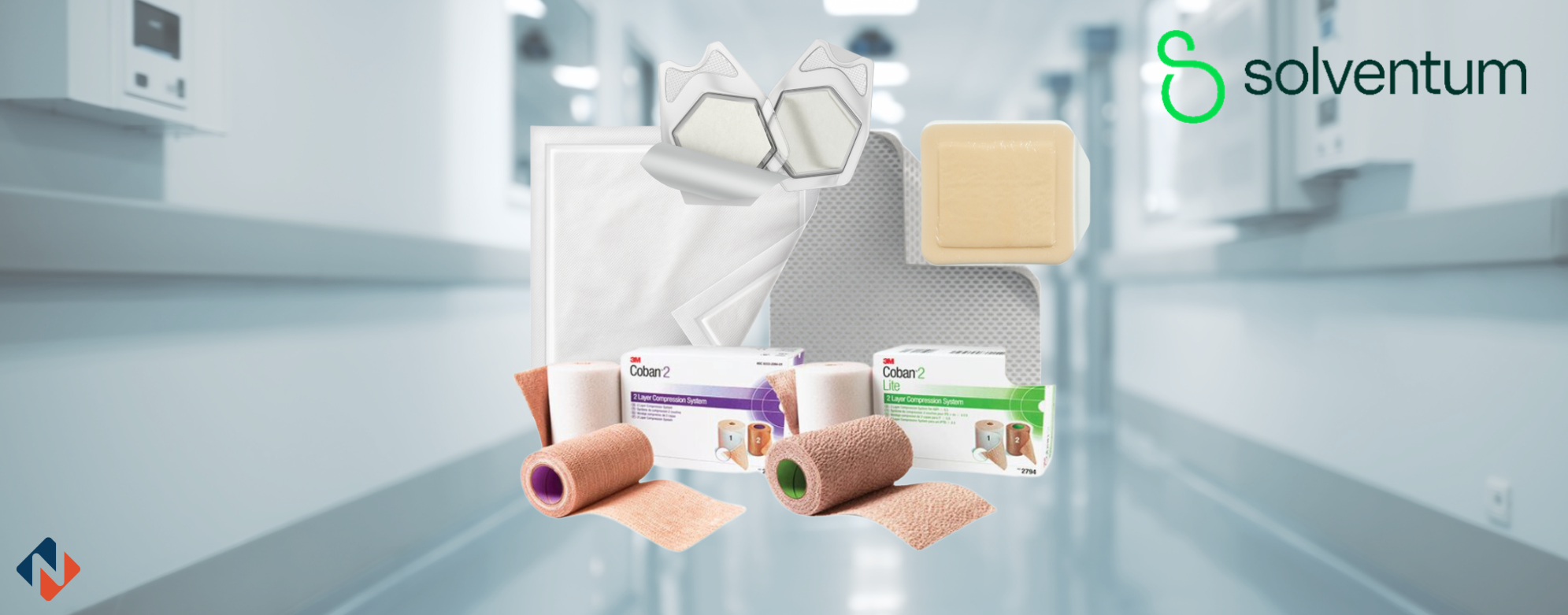
Solventum offers an integrated portfolio designed for real-world wound care scenarios:
Each product is backed by clinical data and developed for ease of use in both outpatient and home care settings.
Solventum’s wound care algorithm is more than a checklist—it’s a tool for empowering providers to deliver timely, targeted care. With simplified decision trees and product selection guidance, community caregivers can act confidently and efficiently to support wound healing—and know when to escalate care.
In the race against chronic wounds, early action is everything. With clinical guidance grounded in the latest research and a full suite of advanced wound care solutions, Solventum is helping frontline providers transform outcomes for patients with hard-to-heal wounds.
Visit the NuEdge website today to learn more about Solventum and their products.
If you are looking for an authorized distributor in your area, check out our interactive map here.